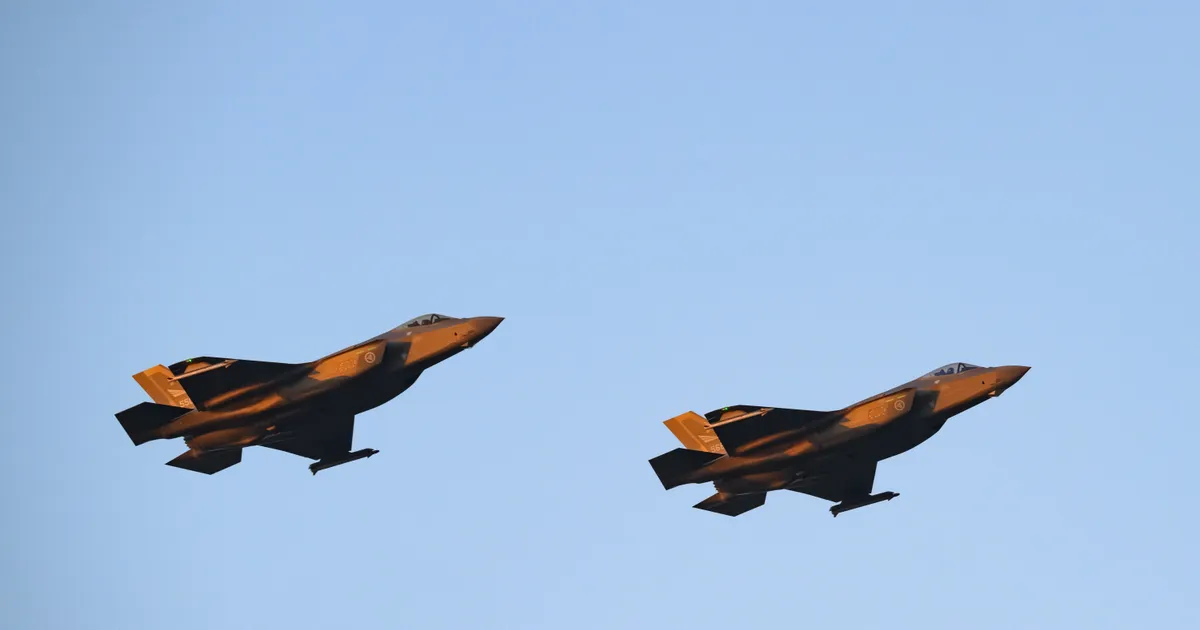
Groningen's F-35 Dilemma: When Military Training Ignites Community Concerns
The picturesque province of Groningen, known for its tranquil landscapes and vibrant community life, finds itself at the heart of a fiercely contested debate. At its core is the proposal to designate Groningen Airport Eelde as a potential training ground for the Netherlands' state-of-the-art F-35 fighter jets. This isn't just a discussion about noise; it's a profound clash between national security imperatives and the well-being of local residents, igniting a passionate standoff. While no straaljager in vlammen incident has occurred, the potential for continuous, high-intensity training by powerful F-35s has set community anxieties ablaze, leaving many wondering if their peaceful existence is 'in flames'.
The Roar of Readiness: F-35s and National Security Imperatives
In an increasingly complex and volatile global landscape, the importance of a strong, well-trained military cannot be overstated. The Dutch Ministry of Defence, like its counterparts across NATO, emphasizes the critical need for robust airpower. The F-35 Lightning II, a fifth-generation stealth multirole fighter, stands as a cornerstone of modern aerial defense. Its advanced capabilities make it indispensable for national security, reconnaissance, and maintaining air superiority in potential conflict zones.
To fully leverage these capabilities, pilots require extensive and realistic training. This necessitates suitable airbases with the infrastructure to support these sophisticated aircraft. Groningen Airport Eelde has emerged as a potential candidate, prompting Defensie to weigh its strategic value against local impact. The argument is clear: in times of heightened threat, a strong, prepared air force is not merely an option but a vital necessity for the defense of the Netherlands and its allies.
Harry Omlo, a Statenlid for JA21 in Drenthe, articulates this perspective, underscoring the military necessity. He acknowledges that choices must be made and that national security often comes at a cost. Furthermore, Omlo points to potential economic benefits, such as job creation and development for Groningen Airport Eelde itself, should it become an F-35 base. "Safety has its price," he suggests, hinting at the difficult trade-offs involved in maintaining a credible defense posture. This holistic view considers not only the immediate military advantage but also the broader strategic and economic ripple effects.
A Community Under Siege: The Human Cost of Jet Noise
While the roar of an F-35 might symbolize strength to some, to the residents surrounding Eelde, it represents a potentially devastating disruption. The primary concern is the sheer volume of noise. F-35s are known for their powerful engines, capable of generating over 100 decibels during takeoff, landing, and maneuvers. To put this into perspective, prolonged exposure to sounds over 85 decibels can cause permanent hearing damage. For communities living directly beneath flight paths, this is not just an annoyance but a serious health hazard.
Anton Reijntjes, representing the "F-35 Nee!" committee, paints a stark picture of the potential consequences. He warns of irreversible damage to the quality of life in surrounding villages, to the point where they might become uninhabitable. Beyond hearing damage, residents fear increased air pollution, unpleasant odors from jet fuel, and a drastic decline in local tourism. The region has invested significantly—a planned 200 million euros—to boost its tourism sector, an investment that would be directly undermined by the incessant noise and perceived environmental degradation from a military training base. The thought of children attending schools in an environment where conversations are drowned out by jet engines, or where schools themselves might have to relocate, is deeply unsettling for parents and educators alike.
Reijntjes's plea is for alternative solutions: "We must look for a place in the Netherlands or in Europe where the damage is not as great as it is here." This highlights a crucial aspect of the dilemma: the acknowledgment that training is necessary, but the location is paramount. The current proposal, from the community's perspective, feels like an unjust burden placed upon their shoulders, threatening their way of life and long-term well-being. This local perspective is crucial when discussing large-scale national projects. For more insights into this balancing act, read our related article: F-35 Jets in Groningen: Balancing Noise, Security, and Locals.
Economic Impulses vs. Local Livelihoods: A Clash of Values
The debate around Groningen Airport Eelde is not solely about noise and security; it also involves a complex economic calculus. Proponents, like Harry Omlo, argue that hosting F-35s could provide a significant economic boost to the region. The presence of military personnel, maintenance crews, and associated services could lead to new jobs and further development of the airport's infrastructure. This could be seen as a strategic investment, transforming a regional airport into a vital national asset with corresponding financial benefits.
However, Anton Reijntjes and the local community view these potential economic gains as a false promise, overshadowed by far greater losses. They argue that any economic boost from military operations would be negated by the devastating impact on existing sectors, particularly tourism. Imagine trying to attract visitors to a region renowned for its peace and natural beauty, only to have it punctuated by the deafening roar of fighter jets. Property values would likely plummet, further impacting residents' financial stability and discouraging new investment in residential areas.
The conflict here isn't just about money; it's about the kind of economy and community Groningen wants to foster. Is it an economy built on military infrastructure, or one that thrives on its unique environmental and cultural assets? This fundamental disagreement over economic priorities and values fuels much of the tension. The question isn't just "will there be jobs?" but "what kind of jobs, and at what cost to existing livelihoods and quality of life?" For a deeper dive into these conflicting economic viewpoints, explore our article: The F-35 Debate: Economic Boost or Unbearable Jet Noise for Eelde?
Navigating the Conflict: Towards Sustainable Solutions
The Groningen F-35 dilemma encapsulates a universal challenge: how to reconcile national security needs with local community interests. Both sides present valid arguments, making a simple resolution difficult. However, several approaches could help navigate this complex terrain:
- Thorough Impact Assessments: Beyond basic noise measurements, comprehensive studies on long-term health, environmental, and socio-economic impacts are crucial. These should consider cumulative effects and psychological well-being.
- Noise Mitigation Technologies: Investigate and implement advanced noise reduction technologies for aircraft and ground operations, even if they add to costs. This could include specialized flight paths, restricted hours, or improved sound barriers.
- Compensation and Relocation Packages: For severely affected residents, fair compensation for property value loss or assistance with relocation to less impacted areas could be considered, acknowledging the significant sacrifice demanded of them.
- Exploring Alternative Locations: A renewed and transparent search for alternative training sites, perhaps in less densely populated areas within the Netherlands or in cooperation with European partners, might alleviate pressure on Groningen.
- Community Dialogue and Participatory Planning: Ensure a genuinely inclusive dialogue where community concerns are not just heard but actively integrated into decision-making processes, fostering trust and shared responsibility.
- Investment in Sustainable Futures: If Eelde is chosen, parallel investments in making the surrounding communities more resilient and attractive, perhaps through new green initiatives or cultural programs, could help offset the negative impacts.
Ultimately, a solution requires creative thinking, a willingness to compromise from all parties, and a commitment to protecting both national interests and local quality of life. The sight of a straaljager in vlammen is a worst-case scenario that thankfully hasn't materialized, but the *risk* of devastating impacts from such powerful machinery operating continuously in a residential area fuels legitimate fears. It's this symbolic "fire" of anxiety and disruption that needs to be addressed with empathy and practical solutions.
Conclusion
The debate surrounding F-35 training at Groningen Airport Eelde is a microcosm of broader societal challenges. It underscores the tension between collective security and individual well-being, between economic development and environmental protection. While the necessity of military training for national defense is largely undisputed, the question of "where" that training occurs remains deeply contentious. For the residents of Groningen, their call is not to abandon security, but to find a balance where their homes, health, and heritage are not sacrificed at the altar of military readiness. Reaching a mutually acceptable outcome will require genuine dialogue, innovative solutions, and a profound respect for the communities who ultimately bear the burden of such vital national decisions.